Showing posts with label cargo. Show all posts

Sunday, 25 March 2012

The Risks of Shipping Cargo Overseas

A reader recently got in touch with a problem related to the above, looking for some help. They, as a manufacturer of goods had received an order from an overseas company and shipped a batch of their product to a foreign country, in a container, with a container line. However, the buyer never paid for the goods and didn't collect them either. The line was then claiming storage charges and they didn't know what to do as the buyer wasn't responding. 


Shipping lines will often charge this 'container demurrage' if goods are not collected and they must place them in storage. The cost can exceed the value of the goods in the container and you then risk the container being sold at a salvage auction to pay off the costs.


However, if your documents are all drawn up correctly you should not find yourself in the position where you have liability for these charges and no right to actually take possession of the goods. In giving some general advice on the matter to this reader I considered that a review of the processes at hand might be useful. The international transport of goods is risky, especially to new markets or customers, but often these new avenues of sales will open lucrative opportunities so it is all about minimising the risk. This can be done in four ways, as follows:

1. INCOTERMS
Ensure that your sales contract contains appropriate delivery terms. This can be easily achieved by selecting the correct INCOTERM (standard form international commercial terms drawn up by the International Chamber of Commerce) and using that in the Sales Contract. This determines who will do what and when the risk in the goods passes to the buyer.

You will probably want to just deliver the goods onto the ship in port (FOB) or may want to get them all the way to destination port in delivery country (CFR) or even direct to the buyer's door (DDP). This avoids arguments about whether you have done what you should have done in respect of the transport of the goods.

2. PAYMENT TERMS
You should arrange payment terms that match the risk of default and value of goods involved. Rather than sending goods to a customer in a foreign country on 30 days invoice terms and then chasing someone you barely know for payment in a foreign country, you should use a Letter of Credit or similar system, whereby you can use respective banks to essentially swap the cargo documents (which will allow collection of the goods) for payment or a guarantee of payment.

This avoids the problem, especially in new business relationships, that a seller doesn't want to release goods without payment and the buyer doesn't want to give over money without having the goods. A common process is that the manufacturer brings the goods to port and puts them on the ship, the ship checks them and signs off a Bill of Lading confirming x goods received onboard the ship. The shipper gives the Bill of Lading to the bank, who then releases the funds from the buyer's account and gives the buyer the Bill of Lading. They can then turn up at the discharge port and collect the goods.

3. CARGO CONTRACT
It is important to ship the goods on terms which allow the sales contract to be completed. For instance, if you send the goods off under a Sea Waybill (not negotiable) and the buyer doesn't pay then you will have a problem, as the ship will only deliver them onto the named received. These Bills cannot be endorsed. Similarly, if someone pays you in advance and you ship on a non-negotiable Bill of Lading to the named buyer, this might cause a problem if they were planning on selling on the cargo (trading it) during transit, and endorsing over the Bills to another party. Making sure this is agreed in Sales Contract should avoid problems.

4. INSURANCE
Finally, as with everything, the best way to alleviate risk is to insure against it. If trading in new markets take out a form of export credit or trade credit insurance (protecting you against the buyer defaulting and leaving you with unwanted costs and losses). If shipping on, say, CFR terms, the buyer will arrange his own cargo insurance but you will arrange the transport and shipping of the goods. What can happen here is that you ship the goods and the buyer contacts you to say they are damaged, so refuses to pay for them or pays less than the contract price. You can't claim the difference because the buyer has placed the cargo insurance and has the right to claim under that insurance. Of course they should then compensate you but this may not happen. There is a special type of cargo insurance - a Contingency (Seller's Interest) Policy - you can take out to cover this risk.

A marine insurance broker will be able to advise on which coverage is most appropriate for your needs and whether individual voyage or annual policies would be more cost effective in your circumstances.


Image Credit: Time Caynes

Monday, 26 September 2011

Common Bulk Cargoes

When a layperson glances at a modern Bill of Lading from a bulk carrier they often ask what cargo is being carried. This is because in order to avoid claims or delivery disputes, the Bills are very specific about exactly what is being carried, rather than using an understandable description. Here is a short guide, which like all our articles we will expand on over time, to the real-world meanings of common cargoes listed as being carried.

SOME COMMON MODERN CARGOES

FAME - Fatty Acid Methyl Esther - These are basically fatty acids (types of energy-rich acid taken from animal fats, vegetable oils), mixed with a pure alcohol (methanol) so they can be stored in a concentrated liquid form. They can readily be stored and transported and the ship's tanks can be relatively easily be cleaned after discharge. The exact quality and type is very important as the type of use and value can vary greatly. Some FAME cargoes may be used at destination for creating food products, face creams or tablets; it would be very important that such a cargo was not contaminated. But equally you could have a shipment of FAME which was old grease and oils collected from restaurants, and other sources, being transported for use as biodiesel (natural diesel) - this would be less valuable. FAME is a very common cargo in modern shipping because of its wide array of applications.


Swarf - metal scraps - This is one of those old words which has stuck in industrial use for want of a better replacement. Swarf used to refer to little bits of metal which fell on the floor whilst you were cutting or working with metal. They used to be of concern primarily as a safety hazard, because even a very thin slice of scrap metal lying on a floor or bench can be a real danger but today with the market price of all metals soaring they are better known as bulk shipments where scrap metal of all kinds is mixed together for shipment to scrapyards for melting down. Sometimes a shipment will just literally be a load of mixed scraps of all kinds (shavings, taps, pipes, cable) and sometimes it will be solid compressed blocks of such scrap. Sometimes you will see basic sorting processes having taken place, lke a designation 'Swarf - 25 MT honey'. This is a reference to scrap of a yellow and gold colour which has been piled together for melting down, as opposed to another lot of scrap madeup of grey metals.

Sunday, 29 May 2011

GUIDE: CARGO SHIPS

Cargo ships are some of the most distinctive ships of any genre of shipping; most uniquely designed to carry a specific type of cargo. Some of the main ones and most distinctive are set out below.


1. BULK CARRIERS
1.1 BULK CARRIERS WITH MULTIPLE HOLDS


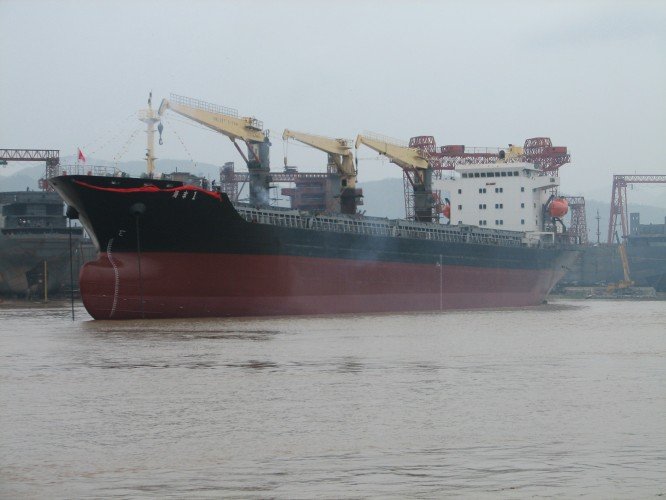
1.2. GEARED BULK CARRIERS (HAVE THEIR OWN CRANES SO THEY CAN VISIT SMALLER PORTS)


2. TANKERS
2.1. GAS TANKERS 
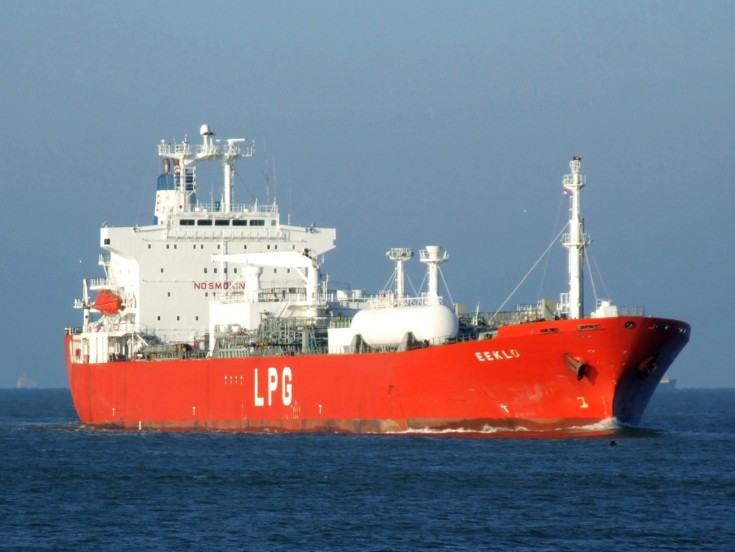
2.1.A. LPG TANKERS


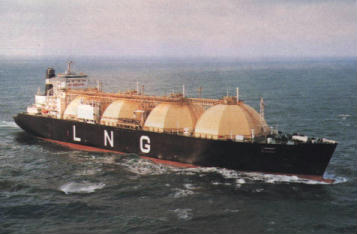
2.1.B. LNG TANKERS


2.2. PRODUCT TANKERS


3. CONTAINERSHIPS


4. REFRIGERATION SHIPS ("REEFERS")
This particular type of vessel is now quite uncommon; thanks to the refrigerated containers which can on containerships there is little need for charterers or cargo interests to hire an entire refrigerated vessel.


5. CAR CARRIERS
5.1. RO / ROs - Roll On Roll Off ships with ramps to load cars which generally transport other cargo at the same time. 


5.2. PURE CAR CARRIERS


Tuesday, 22 February 2011

GUIDE: Cargo Claims

Cargo claims are claims for compensation made against a carrier for loss of or damage to cargo which they carried for reward. These claims are usually brought by owners of the cargo, in contract, based on an allaegation that by damaging the cargo whilst in their custody the carrier breached an express or implied term of the contract.

Subrogation
Most cargo claims against shipowners are brought not by the owners of damaged cargo but by their insurers. As covered in our 'Cargo Insurance' guide, when a party moves cargo they will normally take out insurance to protect them against its loss or damage. These insurance policies typically state that claims will be paid once the cost of the loss or damage to the cargo is known (i.e. they do not require the cargo owner to pursue any legal recourse against the responsible party first).

The reason for this is that most of these policies have a 'subrogation' clause, whcih requires the assured to allow the insurer to pursue a claim against any responsible party where a claim is paid under the policy. The insurance compamny will not have a dircet legal recourse, in contract or tort, against a responsible carrier so any claim they bring would have to be brought in the name of the cargo owner, for which the insurance company would clearly require their permission and cooperation.

Subrogated rights can be evidenced on a form of subrogation signed by the cargo owner / insured and addressed to their insurer. These forms are often sent along with claim settlement cheques where the insurer considers that there may be a legal recourse for damage done to property during tranit.  

Terms
Responsibility for cargo loss / damage will generally turn on evidence of causation and terms of the contract. The contract terms will generally be found in the Bill of Lading, Charterparty or other prevailing carriage document and will usually be subject to one of the main international conventions on the carriage of goods by sea (Hague Rules, Hague Visby Rules, Hamburg Rules etc.). Which convention applies will depend on the countries of transit and the proposed law and jurisdiction of the contract.  

Wednesday, 1 September 2010

GUIDE: Collision Claims

Collision claims, also known as RDC claims*, involve incidents where two ships have made contact, or in layman's terms when two ships have hit each other. 


Liability
Where a collision occurs which is 100% the fault of one vessel, that vessel shall bear its own losses and compensate the other for its losses as a result of the collision. However, because of their very nature collisions almost always involve a degree of fault by each party involved. The general rule is therefore that the total damage is calculated and the % liability of each vessel for causing the collision is calculated and each vessel's owners pay their fair percentage of the total damage.  


Time Limit for Claims
Collision claims are, in most jurisdictions, subject to a two-year time limit, which runs from the date on which the collision occurs. This limit comes from the 1910 Collision Convention, which most countries have ratified.**


Wash Damage
At law claims for 'wash damage' (where the movement of one vessel creates waves in the water which damage other vessels) are generally considered collision claims and dealt with as such by the courts. This is the case even though there is no physical contact between the ships. It is important to note that, despite this, the wording of some P&I and Hull policies will be such that wash damage claims cannot be considered as collisions (if they cover 'contact' with a third party vessel for example).


FFO Claims
When a ship makes contact with property other than another vessel (shore cranes, bridges etc.) and causes damage to it, this is not considered a 'collision'. Technically it is an 'allision' (two moving objects collide with each other, whereas one moving object allides with a fixed object). This term is less common today and these claims are more frequently known as FFO claims, which stands for 'Fixed and Floating Object' claims. Hitting a quay would be an example of damage to a fixed object and cracking a navigational buoy would be an example of damage to a floating object).


* This is the old terms for collisions and stands for 'Running Down Collision', essentially a reference to when one ship ran down, i.e. into, another. 
** Convention for the Unification of Certain Rules of Law with respect to Collisions between Vessels (Brussels, 23 September 1910)

Tuesday, 31 August 2010

ARTICLE: Shipping Accidents on Video

A few of the maritime accidents of the world caught on video.


Sunday, 4 July 2010

GUIDE: P&I Cover


P&I cover is a type of insurance shipowners can take out for claims made against them by third parties. It would cover, for instance, claims for damage to cargo, for injury to passengers or crew and for damage to other ships in collisions. The cover is provided through mutual insurance orgnaisations known as P&I Clubs. They are ‘mutuals’ in so far as they do not set out to make a profit, but merely to ‘pool’ or ‘spread’ the risks of all their clients.

Nomenclature
The world of P&I has its own unique terminology. Risks are not underwritten but ‘covered’. There is not an insurer but a ‘Club’. There are not clients or assured, but ‘Members’. Vessels are not insured by the Club but ‘entered’ with it. There is not an insurance policy, but a ‘certificate’. There is not a policy excess but a ‘deductible’. There are not premiums but ‘Calls’.

General Facts
Usually P&I cover pays the full third party liability claim less the deductible. However, in respect of collision claims the Club only typically pays 1/4 of the claim, providing an extra deterrent for the Member to avoid collisions. Although today many Clubs will cover full liability (known as 'four fourths') for an extra fee.

As P&I Clubs are only generally concerned with third party liabilities they are not concerned with covering damage to the Member’s own vessel. This damage will be covered under a separate ‘Hull’ or ‘Hull & Machinery’ policy.

The 'Pay to be Paid' Rule
As the Clubs are indemnity organisations, they generally compensate the Member for claims they have had to pay to third parties for liabilities incurred in the operations of the vessel. For that reason the Member will usually have to pay a claim and then ask the Club to compensate them for the amount of that payment; they cannot just ask the Club to pay the claim directly. One exception is in personal injury claims where the Club will often agree to pay the claim without the Member having first paid it.

FD&D  Cover
Many of the Clubs now provide FD&D Cover as an optional extra. This stands for Freight, Demurrage & Defence. Essentially it means the Club will represent the Member in respect of extra elements of legal claims not typically covered by general P&I insurance.

The International Group
There is an International Group of P&I Clubs who have agreed to pool their very high value losses (in excess of USD 8 Million) to provide yet further security to their Members. They also work together for the benefit of their Members as a whole. There are currently 13 Clubs who are members of the group; with The Shipowners' Club being the largest in terms of number of vessels entered and GARD being the largest in terms of Gross Tonnage of vessels entered.


Sometimes it can be quite confusing to an outsider to understand all the Club's referred to in the market, as all have a 'management company' which runs the day to day business on behalf of the Club; it will underwrite business and pay claims and the surplus is held for the Club to cover catastrophic losses or years when a very high level of claims are made. Technically, or at least theoretically, the Clubs (being the Members acting as a group) could withdraw or fail to renew their management contract and appoint a new management company, but the relatively small size of the market and shortness of relevant skills amongst the workforce as a whole mean that such an event would be extremely rare. 


Many of the management companies share similar names to their insurer accordingly, but some do not. As a brief guide the Members of the group with significantly different management company names and some nicknames are therefore as follows:

- The American Club
- Brittannia
- Japan Club
- Gard
- The London Club - Managed by Bilbrough
- The North of England (North, NEPIA)
- Skuld
- The Shipowners' Club (Shipowners, SOP, SMP)
- The Standard Club - Managed by Charles Taylor
- Steamship Mutual
- The Swedish Club
- UK Club - Managed by Thomas Miller
- The West of England (the West)

Further Details
Each Club has its own set of Club Rules, which act like a copy of the insurance policy would if the risk were underwritten by a commercial insurer. Typically the certificate will merely state that the Member is entered with the Club subject to the Club Rules and confirm any variances, exclusions or additions, i.e. rather than recite those rules in full. 


All of the Clubs publish a copy of their own rules on their website but the International Group clubs, due to their pooling arrangements must have essentially common insurance cover in their standard Rules (in other words, despite using their own wording, the same risks are overall covered, and the same items are excluded or limited within that cover). 

GUIDE: Marine Cargo Insurance

Marine Cargo Insurance basically insures the owners of cargo for loss of, or damage to, it during a voyage either wholly or partly over water.

Because these insurance policies are relatively complicated and need to offer different levels of cover to different assureds, but they often need to be generated and agreed quickly for urgent shipments, sets of 'standard wordings' are often used by underwriters writing this kind of business.

The most common wordings are those of the 'Institute of London Underwriters'*, known as:
1) Institute Cargo Clauses A (provides the broadest cover, but also the most expensive)
2) Institute Cargo Clauses B (less cover, less expensive)
3) Institute Cargo Clauses C (least cover, least expensive)

There are also standard wordings for these additional risks:
1) War Clauses

2) Strike Clauses

Incoterms (International Commercial Terms)


Incoterms basically give legal clarity of the meaning of terms frequently used in iternational commercial conrtracts. The full descriptions are available here, but essentially they describe who is responsible for cargo and insuring it at varisou stages of transit. There used to be many categories, but now only three remain D, E and F.


Many exporters sell their cargo on a CIF (Cost, Insurance and Freight) basis, so the seller promises to arrange the cargo insurance. If a seller sells goods on an FOB, Ex Works or similar basis, then the buyer arranges his own cargo insurance. This can be risky, because usually the goods are not paid for until after delivery. If the goods arrive in a damaged condition, or an allegedly damaged condition, the buyer may simply refuse to pay for them. In this case, as the exporter has not taken out the cargo insurance, they have no one to appeal to for compensation. Special, relatively cheap, cargo cover has developed to cover only this situation, it is known as 'Contingency (seller's interest)' insurance. 


Common Types of Cargo Cover


Open Cover – This is the most common type. It covers a type of movement for either a set number of movements or over a set period of time. Each individual movement need not be notified to the insurer (for example, if you owned a factory in China exporting rubber ducks to the USA, and sent 10 shipments of one container each a month you could take out open cover for moving rubber ducks from China to the US by container and all your shipments would be automatically  insured).


Specific ('Voyage') Policy – This is cover for an individual shipment, usually high value or an unusual one for the exporter (sending a set of generators to Iraq, where you usually only ship to Europe and the USA for example).


Contingency (Seller's Interest) Policy – As described above, this is the cheapest insurance available. It specifically covers the situation where a seller is sending cargo overseas and the buyer arranges the cargo insurance. If the cargo arrives damaged the buyer may not pay for it and fail to make a cargo insurance claim, or make such a claim but fail to then compensate the seller or pay for the goods. 


Export Credit / Trade Credit - This type of insurance covers sellers exporting goods to customers in a new market. It repays the seller for the cost of the goods where they are shipped to a foreign country and then not paid for due to a fraud or because the buyer has gone bankrupt.


Premium

Cargo premium is generally calculated on the following basis:
1)  The value of goods insured (possibly with an increase to insured value to account for lost profit)
2) The type of goods (highly valuable, dangerous, toxic etc.)
3) The dangers faced by the goods (modes of transit, area, length of journey etc.)


Related Terms


General Average – All cargo must pay a portion of the damaged cargo on the basis that it was sacrificed to save the remaining cargo. Good examples include: cargo wet damaged when sprayed with water in a fire fighting action onboard. Generally the carrier will not release safe-landed cargo in a GA situation until a contribution to the damaged cargo is paid. If insured the insurer will pay this or post a bond for it to allow the cargo to be released.


Particular Average – A situation where the loss or damage to a cargo is borne only by the owner of that cargo, usually the shipper. 


Both-to-Blame Collision Clause – In the event of two ships colliding at sea where both are at fault, all vessels and cargo (by way of their hull or cargo policies) shall proportionately pay their share of the total losses based on the value of their cargo.


Sue and Labour Clause - A standard clause in a maritime insurance policy which allows the insured to recover from the insurer any reasonable expenses incurred by the insured in order to minimise or avert a loss to the insured property, for which loss the insurer would have been liable under the policy.


Facts to Note


Cargo which is insured against "All Risks" is not insured against "all losses", only losses caused by a "fortuity" in transit.

* The Institute of London Underwriters (ILU) recently merged with a re-insurers organisation (LIRMA) to create the International Underwriting Association of London (IUA).

Saturday, 3 July 2010

Q: What is the Difference Between a Boat, a Ship and a Vessel?


Vessel is a catch-all term, like 'watercraft', which describes any floating object used for the carriage of people or goods. Generally smaller and less complex vessels are 'boats', whilst larger and more complex vessels are 'ships'. As a general rule, you can put a boat on a ship, but you can't put a ship on a boat. 

Specifically, boats are small to medium-sized vessels with hulls,* powered by sails, engines, or human force. Some types of vessel are always categorised as boats, regardless of their size or complexity.** Their 'boat' status was designated when these types of vessel were small and has stuck despite their future growth.

A ship is a larger vessel, built to transport either passengers or cargo. These types of vessel started off large and accordingly we talk of a cruiseships, containerships and a battleships.

* a raft, for instance, has no hull; it would therefore be incorrect to call it a boat - hence 'life raft'.
**  submarines, fishing boats, tugs and barges for example.


(Image Credit: John Keogh)

  © Blogger template 'Isolation' by Ourblogtemplates.com 2008

Back to TOP