Showing posts with label types. Show all posts

Thursday, 2 April 2015

A Visual Guide to Tug Boat Types

Tugboats are one of the most easily recognised of all vessel types, and have found a popular place in the public's eyes, even appearing in a number of Children's books and television programmes. However, there are a number of common varieties it is useful to recognise if you are working in the industry; each has some distinctive features, as set out briefly below.

-

The Common Harbour Tug

The workhorse of all local and national harbours, these versatile little tugs are able to help with all kinds of activities in port, as well as berthing, towing vessels out and potentially salvaging vessels in distress. Identify them by their small size and all-round basic fendering (often tyres) which shows the variety of jobs they may have to assist with.

Image credit: simplonpc.co.uk

-

AHTS (Anchor Handling Towage Supply)

These large, advanced tugs are favourites of the offshore industry, these tugs can provide all the services required to oil rigs and platforms, including towing them into place, setting their anchors, and carrying goods and cargo as well as crew to and from the vessel. Identify them by their very large size, gear (cranes onboard for lifting), and open-backed stern (for taking anchors onboard).

Image credit: aluminiumnowturkey.com

-

Pusher tug / River Tug

These vessels principally operate in sheltered inland waters, and tend to push (rather than tow) other vessels. Because they typically push barges or regular vessels by their flat stern, they are usually unusual looking with a flat front.  

Image Credit: GPIA.com

-

ATB Tugs

Articulated Tug and Barge (ATB) combinations are custom built sets of tugs and barges which go together. Normally the tug slots into the back of the barge for a more secure fit. Because they are often pushing large unmanned barges from behind, they need to have their bridge set very high, to see over the front of the barge; hence the unusual 'high neck' appearance. These vessels are more common in the USA.

Image credit: towmasters.wordpress.com

-

ASD Tugs

Azimuth Stern Drive (ASD) tugs do not have a rudder and propeller system like most vessels. Instead they are fitted with an advanced propeller which itself can turn direction, normally with one or two such propellers fitted at the stern of the vessel. This gives the tug much improved and more efficient manoeuvrability in the water, which allows them to better help other vessels. It also reduces running costs. However, these vessels remain expensive to build so look out for top-spec, modern-design, with more of an even all around freeboard tugboats.
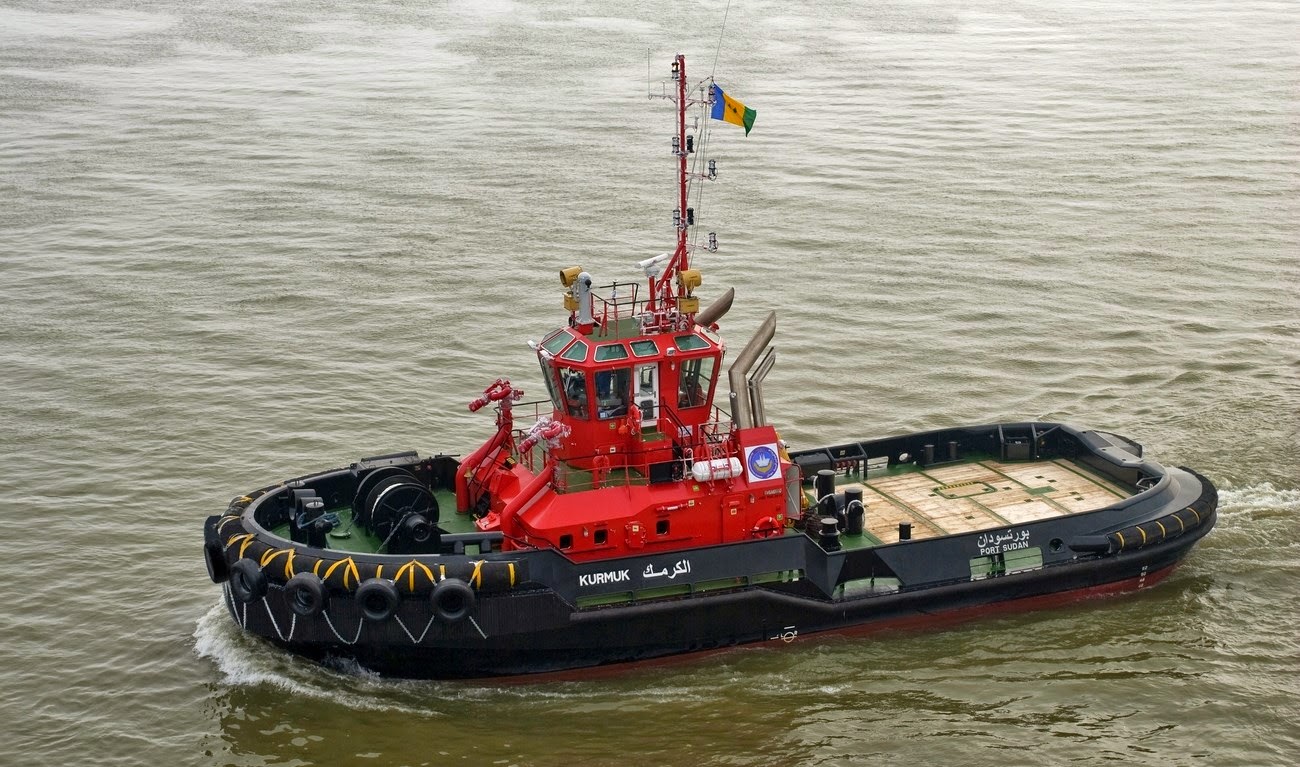
Image credit: products.damen.com

-

SDM Tugs

Ship Docking Module (SDM) tugs are, as the name implies, specifically designed to help other vessels dock in sheltered harbours or marinas. They have a very low and wide freeboard, so they can get up close to any section of the hull of larger ships without damaging them. They are also extremely nimble and have two Azimuth (360 degree) thrusters at either end, so they can spin 360, or speed up very quickly then move the opposite direction. They have a patented shape like a floating saucer, and because they are patented by one marine company (Seabulk), they are not as frequently spotted as other harbour craft.

Image: ebdg.com


Saturday, 19 February 2011

ARTICLE: The Difference Between Admiralty, Marine, Maritime, Shipping Law etc.?

There are many terms to describe the law of ships and shipping; some of which have broad, and others quite specific, meanings. A brief guide to the correct uses and distinctions follows:


Admiralty - Traditionally 'admiralty law' referred only to contractual and tortious disputes arising from the operations of ships (named after the typical work of the Admiralty Court in England). It would not, for instance, cover governmental or international shipping regulations. However, the description has become more loosely used over time and today it is interchangeable with 'Maritime Law' as a term describing all law related to ships.

Boating Law - This is a US term, which essentially means the same as 'admiralty law', although it is often used to describe smaller level admiralty law (yacht fees, radio requirements etc.).

Carriage of Goods Law - This specifically relates to the law of moving cargo. It is not restricted to marine cargo (unless referred to as 'Carriage of Goods by Sea Law') and will cover goods being moved by sea, road, rail, air and multimodal (by more than one means).   

Law of the Sea - This is an area of public international law (deals with relationships between countries, rather than private people or companies). It provides rules on sea borders, pollution, ownership of natural resources at sea etc. The United Nations Convention on the Law of the Sea (UNCLOS) provides much of the law in this area. 

Marine Law - This is perhaps the most broad of the terms and encompasses all law related to the sea or waterways. It would cover international agreements on sea borders, laws on fishing quotas and the law governing transport of goods or the operation of ships (i.e. it is a catch-all term for Law of the Sea and Maritime Law).

Maritime Law - Describes all law related to ships and shipping; including the building, navigation, crewing, operation and other activities and incidents related to ships. Although now used interchangeably with the term 'Admiralty Law', Maritime Law is preferable as the more common term.

Shipping Law - This is perhaps the best term to describe the law relating to ships. Shipping law covers the building and operation of ships and is split into two categories: wet and dry. 'Wet' shipping law involves things happening on water, like ships sinking, colliding with other ships or objects and other casualties at sea. 'Dry' shipping law refers to things happening on paper like disputes about charterparty clauses or shipbuilding contracts. Many lawyers who deal with wet shipping matters only consider that dry shipping disputes can be boring as they are not linked to any real wolrd event.

Trade Law (aka ´International Trade Law´) - This refers to the law of trade between countries and the international conventions governing that trade. It is only loosely related to ships, via international conventions like UNCITRAL (United Nations Convention for International TRAde Law).

Transport Law - This is a catch-all term for the laws covering all types of transport, incluing sea, road, rail and air transport. It may proscribe something like that a certain product must be carried by sea, and not by air.

A diagram laying out the main distinctions above:

  © Blogger template 'Isolation' by Ourblogtemplates.com 2008

Back to TOP