Thursday, 20 January 2011

Does the Athens Convention Only Apply to 'International' Carriage of Passengers?

Generally, yes, but in the UK, no.

The Athens Convention 1974 applies to the "international carriage" of passengers by sea. It provides for a two year time limit for bringing claims against the carrier (reduced from 3 years under English law generally).

The Athens Convention was brought into law in the United Kingdom by the Merchant Shipping Act 1979. This applied the terms of Athens Convention to all passengers on international voyages, departing from or bound for the UK.

However, in 1987 the UK government the ‘Domestic Carriage Order’[1] was brought into force, which extended the Athens Convention cover to all passengers on voyages which begin and end within the UK, Channel Islands or Isle of Man.

--------------------------------------------------------------------------------
[1] The Carriage of Passengers and their Luggage by Sea (Domestic Carriage) Order 1987

Sunday, 12 September 2010

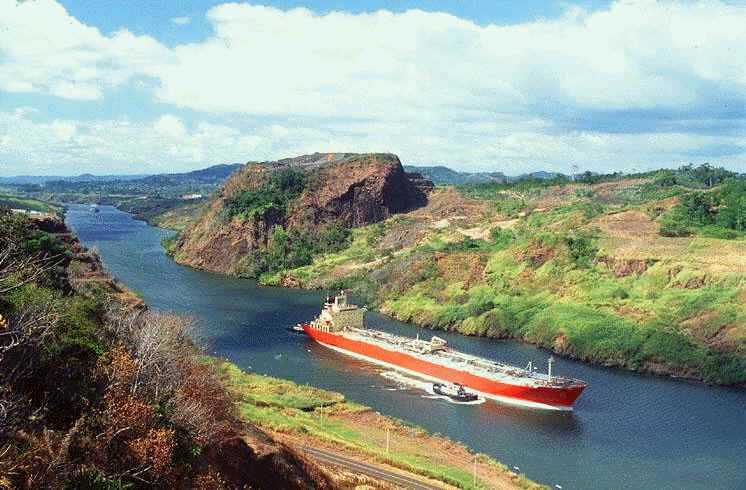
How Much Does it Cost to Use the Panama Canal?

The Panama Canal links the world's two biggest oceans; the Atlantic and the Pacific. When it first opened, in the early 20th Century, it saw around three vessels a day pass through; but today, almost 50 vessels a day use the canal.


A vessel must pay a toll fee to use the canal, which is calculated based on the size of the ship, type of ship and the number of passengers or the amount of cargo onboard. The typical rates paid are as follows:

Yachts and Other Small Vessels: USD 1,300 to USD 2,500
Loaded Containerships: USD 50,000 to USD 250,000
Cruise Ships: USD 80,000 to USD 300,000  

The most expensive toll fee ever paid was by the Disney Cruise Ship on 16 May 2008; of USD 331,200 for one West to East passage.

Saturday, 11 September 2010

Q: What is the Biggest Ship in the World?

This question is one of the most frequently asked to anyone who works in the world of shipping, and unfortunately there is no easy answer. It really depends on what you mean by biggest.


THE LONGEST
Name: "Knock Nevis"*
Type: Supertanker
Length: 458 metres


THE WIDEST
Name: "USS Nimitz"
Type: Aircraft Carrier
Width (Beam): 77 metres


THE HIGHEST GROSS TONNAGE (GT)
Name: "Batillus"
Type: Supertanker
GT: 275,276 tons


THE MOST PEOPLE ONBOARD
Name: "Oasis of the Seas"
Type: Cruise Ship
Capacity: 6,296 people (passengers and crew)


- o -

* The "Knock Nevis" has now reached the end of its useful life and has been sold to a firm of Indian shipbreakers. People often wonder why, in an industry of economies of scale, more supertankers of this size and larger have not been built. Well we have to remember that the Knock Nevis' size also caused its owners a lot of logistical problems; its huge size required a draft (a water depth) of over 80 feet, meaning some of the world's main shipping routes, like the Suez and Panama Canals and the English Channel, were no-go areas for the ship.

Q: What is the Difference Between an Ocean Liner and a Cruise Ship?

You will often hear people claim that their voyage onbaord the Cunard ship "QE2" (below) was one onboard the world's largest 'Ocean Liner'. This is correct, as the "QE2"(recently replaced by the "Queen Mary 2") was the world's largest Ocean Liner.


It was, however, nowhere near as big as, for instance, the "Oasis of the Seas" (below) or similar cruise ships; so what was the distinction?


The "Oasis of the Seas" and other such vessels are categorised as 'Cruise Ships'; large vessels used for the accommodation and entertainment of guests during a sea voyage for pleasure. An 'Ocean Liner', on the other hand, is a large ship which transports people from one designated port to another.

If you like, an 'Ocean Liner' is a form of sea transport which involves a luxury holiday, whereas a 'Cruise Ship' is a form of luxury holiday which involves sea transport.

The "Oasis of the Seas" goes on various different 'cruises' throughout the year, with different itineraries, starting and ending in the same port (usually Ft. Lauderdale, USA). The "QE2" on the other hand transported people across the Atlantic, between the ports of Southampton and New York and fed and entertained them on the way.

GUIDE: Towage Claims / Law

When we consider towage, we generally think of one vessel pulling another at sea. However, technically towage is merely any operation where one vessel is assisting another (helping to berth, ating as pusher tug, providing an escort, etc.

The vast majority of towage claims are claims in contract.[1] Routine towage operations under contract are referred to in law as “ordinary towage”, and are contrasted with the sort of ‘emergency’ towage which takes place during a salvage operation. In the vast majority of ordinary towage situations a tug will be providing services on a standard form of contract wording, which both parties will be familiar with.


“Knock-for-Knock” Terms (kfk / k4k)

It is important that our Members enter towage contracts which are on what is known as “knock-for-knock” terms, or terms more favourable. Knock-for-knock terms are essentially an agreement whereby each party takes responsibility for damage to their own property or injury to their own employees, regardless of how caused (i.e. who was negligent). Accordingly, the parties also agree to indemnify each other against claims brought by third parties against the wrong side. The most common standard form towage contracts all include such terms, or terms more favourable still.  


Standard Form Contracts

The main standard form towage contracts used are as follows: 

“UK Standard”[2] - These are the main terms used by harbour authorities in the UK and are used for all general day-to-day towage operations undertaken by their tugs. They are found throughout the common law world and are considered exclusionary, in that they generally exclude the liability of the tug, for damage to the tow and even for damage to the tug (which must be paid for by the tow). For this reason they are considered more favourable, for the tug, than basic “knock-for-knock” terms.

“Towcon” 2008
[3] - Towcon contains a basic form of knock-for-knock terms, where the tow and tug agree to meet their own liabilities. Where the tug collides with another vessel or property it accepts liability for the damage and where the tow collides it does the same. The contract is designed for use in the ocean towage of a vessel from one place to another at a fixed rate.

“Towhire” 2008[4] - Towhire contains the same basic form of knock-for-knock terms as Towcon, but the contract is designed for the hire of a tug for a period of time, rather than for one specific job.

“Supplytime” 1989 or 2005[5] - Supplytime is not technically a towage contract but a charterparty for the hire of a vessel. However, it is often used in the offshore industry as a contract under which to hire a tug, which will then provide towage services. The contract contains knock-for-knock terms but there is a risk if the tug, once hired, is used for towage operations involving third party vessels. They may then bring claims directly against the tugowner, who would be unable to rely on contractual defences or limits.

Contracts at Common Law 
Sometimes terms are not agreed in advance of the towage operation, or the terms used by the tug are not properly incorporated into the contract of towage. In these circumstances the courts will apply what they call an ‘ordinary contract of towage’. This is a contract with only basic terms, under which the owner of the tug is required to provide a seaworthy tug, which is properly manned and equipped and they must be competent and use skill in carrying out the operation.


A common law towage contract, such as this, is not desirable for a tugowner because although it still absolves them of liability for accidents beyond their control, it does not provide the necessary defences, limitations of liability and safeguards that the normal standard form conditions provide.

The often cited general principle of towage that "tug is servant of tow", in other words the tug is (generally) the smaller vessel and is only acting under the instructions of the larger vessel. The principler comes from The Niobe (1888).   


[1] There are some notable exceptions. In salvage claims where there is no contract claims arising are based on equitable rights at common law. In so-called ‘gratuitous’ towage situations, where no charge is made for the towage service, claims are based in tort. And where the tow is capable of being considered ‘property’ (say a dumb barge incapable of independent navigation and with no crew) then a claim in bailment is also possible.
[2] UK Standard Conditions for Towage and Other Services (Revised 1986) – Issued by the British Tug Owners Association.
[3] BIMCO’s Towcon 2008 – International Ocean Towage Agreement (Lump Sum).
[4] BIMCO’s Towhire 2008  – International Ocean Towage Agreement (Daily Hire).
[5] BIMCO’s Supplytime ’89 / Supplytime 2005 – Time Charter Party for Offshore Service Vessels.

GUIDE: Salvage Claims

'Salvage' is the term used in maritime law to refer to the process whereby a third party rescues a vessel from a danger which would have likely destroyed it by sinking, breaking it up or otherwise. 

The third party is generally entitled to a financial reward for such an action as their assistance can often lead to a saving of several thousands or millions of dollars for the vessel's owner (the vessel may be worth a considerable amount, its cargo may be worth a considerable amount and the consequences of its loss being avoided - i.e. no fine for oil pollution - may also be worth a considerable amount to the owner.

A salvage operation is generally distinguished from 'wreck removal' as its purpose is usually to save a vessel as a going concern, whereas a wreck removal generally concerns a vessel which is already agreed to be a total loss. Consequently salvage operations usually try to cause minimal damage to the concerned vessel whereas wreck removal operations often involve intentionally breaking the vessel involved into pieces.

There are myriad laws around the world concerning salvage and each situation will turn on the particular laws and contracts that apply, as well as the court which has jurisdiction, but there are some general principles which are useful to know as a base knowledge.


GENERAL PRINCIPLES

1. Normal contractual assistance will not generally constitute a salvage operation. For example, if your vessel is in distress and you decide you need the services of a tug to tow you to a safe port. If you radio a local port and agree basic contractual terms for a towage operation with a set fee then the tug owner could not take your vessel back to port and claim salvage.

2. It is generally accepted that the salvor has a right to a reward for saving the vessel because as we have seen above his service in this regard can be priceless but clearly he cannot merely decide the ship is his own property. Therefore the courts' view is that an amount of reward should be given to the salvor by the distressed vessel, which is appropriate to the value of the vessel saved, the level of distress it was in and the level of risk which the salvor(s) had to take to salve the vessel.

3. As time is of the essence when a vessel is in distress it is understood that neither the salvor nor the captain / owner of the distressed vessel will generally have time to take lengthy legal advice and negotiate contractual terms for the salvage operation. For this reason procedures such as LOF (Lloyds Open Form), have evolved,  which allow the parties to essentially agree that the operation will go ahead and if they are unable to agree on the appropriate amount of salvage reward afterwards then a specialist arbitrator appointed by Lloyds of London shall make the decision. This option is popular with salvors and distressed vessels as in the heat of the moment it allows decisions to be made quickly without the risk of any gross injustice resulting to either side.

4. In some countries certain vessels in distress may be able to benefit from the assistance of a charitable organisation, such as the RNLI in Britain and Ireland. They respond rapidly to emergencies at sea and whilst the crewmembers waive their right to claim maritime salvage, it is widely accepted that a suitable donation should be made to the service in lieu of them claiming any salvage.

OTHER TYPE OF MARINE SALVAGE

A. FLOTSAM / JETSAM
These terms refer to parts of a ship or its equipment or cargo which wash up ashore. Flotsam refers to things which are accidentally lost at sea (say cargo which is washed overboard in a storm) and Jetsam refers to things which are intentionally put overboard (usually to lighten the ship in heavy weather or in the event of engine problems). When either washes up on the shore they are sometimes referred to as salvage, mainly because in principle those finding them are rescuing them on the shipowners behalf (they should be reported to the receiver of wrecks but sadly this does not frequently happen).

B. DAMAGED / UNWANTED CARGO
Often cargo which is not paid for or accepted by the consignee (say rolls of paper which have got wet during transit and the buyer rejects them or shop fittings for a shop which has gone bankrupt) will be sold as, or for, salvage. Often such goods only achieve a fraction of their original value, which is referred to as their salvage value.

Wednesday, 1 September 2010

Glossary

This is a collection of terms that I have built up after being asked by someone what something means or which I have heard people appear to misunderstand. I have endeavoured to explain each in simple terms.

Click here for my list of industry acronyms.

Actual Total Loss - A reference to a vessel which has been completely destroyed or irretrievably lost. For example where a boat is broken to pieces in a storm and scattered by the sea or where a ship sinks in very deep water. Can be contrasted with Constructive Total Loss (below).

Air Draught - Refers to the space available above water, for instance to warn of low handing objects of cranes.


Allision - Contact between a ship and some fixed object like a quay or shore crane.

Anchorage - An area where vessels can safely drop anchor and stay, usually close to a port.

Bunkers - The fuel used on ships, i.e. people will often say the ship is going into port to 'take on bunkers'. The term can actually apply to any form of fuel oil which is used onbaord a ship, it doesn't have to be used in the ship's main engine. Therefore even diesel oil used by equipment onboard can be said to be 'bunkers'. Lub oil would not however be classed as bunkers because it is not fuel.

Butterfly Valve - This is a type of valve used in pipes or pipelines which allows the pipe to be closed or flow through it limited, from the outside. This is done by turning a handle or moving an actuator (often controlled by a motor) on the outside of the pipe which turns a circular piece inside the pipe which can close off the pipe. When turned completely sideways the pipe is fully open. A picture of the pipe design is available here. Because defects in the valve are only usually noticeable after a failure occurs (the working mechanism is invisible from the outside) this can lead to incidents onboard.

Butterworthing - This describes the system of cleaning the tanks onboard a vessel with a special hose with multiple nozzles, like this, which spray high pressure water in all directions. The system was used by, and hoses produced by, a company called Butterworth, which resulted in the type of tank cleaning being described as Butterworthing (much like how 'vacuum cleaning' became 'hoovering').

Common Carrier - Most 'carriers' for the purpose of shipping law are contractual carriers, in other words they carry cargo or people against a Bill of Lading or passenger ticket, i.e. on agreed terms. There do still exist what are known as 'common carriers' who basically agree to move certain goods or people based only on common law terms. They generally issue no documents with terms on them and carry lots of small amounts of goods or people on short journeys and wish to keep admin' costs low. The equivalent on land would be a public bus, where someone can jump on and off without agreeing any carriage terms.

Constructive Total Loss (CTL) - This is a reference to a vessel which is being treated as a total loss for insurance purposes even though it is physically still there. This generally applies where the cost of salvaging the vessel or making it usable again is greater than the value of the vessel itself (i.e. greater than the cost of buying another similar vessel). For example where a ship worth USD 50,000 is grounded and a hole is punctured in its hull, the quoted cost of patching the hull, towing it to port and fully repairing it might be USD 75,000. In the circumstances its owners would call their hull insurers and tell them they were treating it as a CTL.

Ice Demurrage - This is a type of Demurrage which uniquely occurrs when a port that a charterer has asked a ship to go to is closed or blocked due to ice. Generally the ship will be able to claim demurrage for the resultant delays at the standard demurrage rate as it is a risk of the charterer, trading in such areas, that the ports will be closed and it is generally considered that the price of the goods involved will 'factor in' such risks and costs.

Zodiac - This is a type of small, inflatible boat. They get their name from the manufacturers, Zodiac, but the boats have proven so popular in their field that in the same way peolpe might describe any vaccum cleaner  as a Hoover, any boat mathcing this description is sometimes referred to as a Zodiac.

GUIDE: Collision Claims

Collision claims, also known as RDC claims*, involve incidents where two ships have made contact, or in layman's terms when two ships have hit each other. 


Liability
Where a collision occurs which is 100% the fault of one vessel, that vessel shall bear its own losses and compensate the other for its losses as a result of the collision. However, because of their very nature collisions almost always involve a degree of fault by each party involved. The general rule is therefore that the total damage is calculated and the % liability of each vessel for causing the collision is calculated and each vessel's owners pay their fair percentage of the total damage.  


Time Limit for Claims
Collision claims are, in most jurisdictions, subject to a two-year time limit, which runs from the date on which the collision occurs. This limit comes from the 1910 Collision Convention, which most countries have ratified.**


Wash Damage
At law claims for 'wash damage' (where the movement of one vessel creates waves in the water which damage other vessels) are generally considered collision claims and dealt with as such by the courts. This is the case even though there is no physical contact between the ships. It is important to note that, despite this, the wording of some P&I and Hull policies will be such that wash damage claims cannot be considered as collisions (if they cover 'contact' with a third party vessel for example).


FFO Claims
When a ship makes contact with property other than another vessel (shore cranes, bridges etc.) and causes damage to it, this is not considered a 'collision'. Technically it is an 'allision' (two moving objects collide with each other, whereas one moving object allides with a fixed object). This term is less common today and these claims are more frequently known as FFO claims, which stands for 'Fixed and Floating Object' claims. Hitting a quay would be an example of damage to a fixed object and cracking a navigational buoy would be an example of damage to a floating object).


* This is the old terms for collisions and stands for 'Running Down Collision', essentially a reference to when one ship ran down, i.e. into, another. 
** Convention for the Unification of Certain Rules of Law with respect to Collisions between Vessels (Brussels, 23 September 1910)

Tuesday, 31 August 2010

ARTICLE: Shipping Accidents on Video

A few of the maritime accidents of the world caught on video.


Monday, 30 August 2010

The Most Exclusive Marinas in the World

Owners of the world's largest superyachts are not exactly short of cash, which is lucky, because finding somewhere to "park" them can be a costly endeavour. Although you've paid out tens of millions of dollars for your very own floating five-star hotel, a trip to Monaco or St. Tropez will still cost you thousands of dollars a night.


In fact, a recent survey recorded the cost of keeping your superyacht moored in some of the world's most desirable marinas; and here are the top ten most expensive, along with my thoughts on each! By the way, these prices are for visitors on short stays, if you were going to hire a berth for year-round storage the cost would be considerably less (a marina where it cost EUR 2,000 a day for a peak-season superyacht visitor, might work out at only EUR 100,000 a year for an annual berth - an effective rate of EUR 270 a day!).

1. CAPRI (Italy)
Daily fee*: EUR 2,900
Thoughts: Capri, a small, rugged island off the coast of Naples has been a luxury retreat since Roman times. Today, its compact size and steep terrain, which restrict building and expansion, allow it to maintain an air of super-luxury. In the summer it is one of the world's top locations for celeb-spotting as many of the Hollywood A-list visit annually. The harbour, being small and only having enough room for around ten large yachts, is now recognised as being the most expensive in the world.  


2. PORTO CERVO (Italy)
Daily fee: 2,500
Thoughts: A large, modern, high-technology port in a picturesque Italian town on the North Coast of the Italian island of Sardinia. The Costa Smeralda Marina at Porto Cervo has a large, well-renowned yacht club and ship-repair yard, meaning it has all the facilities and space you would find in a blank-canvas, Middle-East marina, but with the old-world European charm as well. As a result, the area attracts some of the world's largest superyachts.

3. PORTOFINO (Italy)
Daily fee: 2,350
Thoughts: Portofino is almost the exact opposite of Porto Cervo (listed above). It is on the Italian mainland, it has relatively few facilities and the fewest spaces for large yachts of any port on this list (just six!), but its charm comes from this seclusion. The small fishing village has no airport and only one access by road, which is closed for much of the year. It became popular as a secluded get-away for British Aristocrats and European millionaires, who built large mansions in the surrounding area; today, its relative inaccessibility by any means other than boat, means that it remains a favourite destination for the superyacht elite.


4. IBIZA MAGNA (Spain)
Daily fee: EUR 2,300
Thoughts: Ibiza is arguably the world's top party town, and for any younger superyacht owner in the mood to celebrate where better than the uber-luxurious Ibiza Magna Marina, right beside the Island's biggest casinos, nightclubs and bars. The marina is not particularly large, but has very modern facilities and visitors have the knowledge that they can sail in at any time of night or day and join in a 24/7 party culture keeps demand for berths well above supply, and the price resultantly high.


5. ST. TROPEZ (France)
Daily fee: EUR 1,300
Thoughts: Far and away the No. 1 superyacht destination in France, St. Tropez lies at the heart of the French Riviera, and is the place in France to show off your megayacht. It has some old-world charm with its winding streets and a smattering of traditional shops, but it is now very much a millionaires' playground, with five star hotels, Michelin-starred restaurants and shops selling diamond-encrusted Rolex watches.


6. PORT HERCULE (Monaco)
Daily fee: EUR 1,200
Thoughts: Monaco is somewhat of a different beast to the other European ports and marinas listed above. It tends to be somewhere where the super wealthy actually live, rather than merely visit. There is no income tax in Monaco. So, if you have a multi-million pound business somewhere in the world and are paying, say, 40% tax on the income you receive from that business, what you do is move to Monaco; then you pay no tax on it. As a result, almost 85% of the population of Monaco are high-net worth foreigners. For this reason, despite the enormous concentration of wealth, there is less need for berths or moorings as the superwealthy in the area are generally staying in their own houses, rather than boats. There are, of course, still super-wealthy visitors, especially during events like the Monaco Grand Prix, and these people ensure the main Port still commands a place in the top-ten.


7. MIAMI BEACH (Florida, USA)
Daily fee: EUR 883
Thoughts: Miami Beach, the No.1 Marina in the US and gloriously American; it's huge (room for almost 500 yachts), super-modern, ultra-luxurious and fully functional 24/7. Almost everything you could ever want is provided at the Marina (including an Olympic sized swimming pool) and anything that is not available on site can be arranged for you by the on-site concierge. Of course there is also the draw of the international-entertainment capital of Miami itself.


8. PORT DE CANNES (France)
Daily fee: EUR 655
Thoughts: Like St.Tropez, Cannes is a top destination for the welathy yacht-owner visiting the French Riviera. The port itself is one of the largest in Europe, with over 2,000 berths. Prices fluctuate throughout the year, but thanks to world-wide attention during events like the Film Festival and various economic and commercial conferences some of the larger berths have been known to have a pre-booking period of over one year in advance.


9. PORT OF GUSTAVIA (St. Barts, Caribbean)
Daily fee: EUR 500
Thoughts: A relatively small but very busy marina in the Capital of St Barts, a French Caribbean island which is dotted with high-end boutiques, luxury hotels and private villas for visiting millionaire boat-owners to rent. The island has a population of less than 3,000 and is renowned as a secluded playground for the rich and famous. During the high seasons, like mid-summer or at Christmas and New Year it is near impossible to find any available space in the marina.


10. YAS MARINA (United Arab Emirates)
Daily fee: EUR 421
Thoughts: The Yas Marina is quintessential 'Abu Dhabi'. It is a showcase of the wealth of the Middle East, growing from nothing on a man-made island, into one of the world's most luxurious marinas; surrounded by newly-built skyscrapers, water parks, 5 star hotels and the Abu Dhabi Formula 1 Race Track. The marina and island on which it stands are still in their nascent stages, but with USD 36 Billion being spent on them it is perhaps no surprise that they will be looking for a reasonable daily contribution from visiting superyacht owners.


* This is average fee, per day, for mooring a superyacht based on information provided by a recent 'Wealth Bulletin' Survey. 

  © Blogger template 'Isolation' by Ourblogtemplates.com 2008

Back to TOP