Monday, 20 January 2014

CONTRACT WORDING: 'including, without limitation...'

Ship owners benefit from a range of limitation conventions and contractual limitations and often their insurances (especially P&I Cover) will be prejudiced in the event that they optionally waive those rights to limitation, so careful attention to contract wording is essential.

A contract which seeks to have the ship owner waive his rights will normally include an express term to that effect, i.e. 'the owner hereby agrees to waive their right to limit under the LLMC Conventions, CLC Conventions or any other ...' or 'the Owner shall pay claims for damage to Charterers property arising under this contract in full and without limitation'.

This language is not to be confused with the phrase from american legalese which is now common in many commercial legal contracts worldwide - 'the Owner agrees to indemnify / settle ... including, without limitation, claims for x, y, z.'. Some have argued that this may be construed as an agreement to settle those specific listed claims without limitation, but this is not the case. This arrangement of words merely means 'included but not limited to'.

For example, if a ship owner agrees to pay the Charterers claims for losses resulting from the ship owner's crew's negligence including, without limitation, claims for pollution, property damage and third party injury, then those types of claims resulting from the ship owner's crew's negligence are definitely to be met by the shipowner, but this does not limit or prevent the Charterer from also claiming for other types of claims resulting from the ship owner's crew's negligence. Any application of limitation conventions is unaffected by the clause.

Another confusing phrase which is used in the same context is 'without limitation to the generality of the foregoing' or 'without prejudice to the generality of the foregoing', which merely means where you express a rule then give some examples, the examples cannot be said in any way to weaken or restrict the general rule which stands as if the examples had not been given.

How can I ensure that the Hague Visby Rules will apply to my Bills of Lading?

The Hague Visby Rules (HVR) provide a basic standard for carriage of cargo terms, and they are critical for shipowners in maintaining cover with their P&I Clubs as they must not contract on terms less favourable than the HVR. This is because the HVR contain exclusions, limitations and provisions which protect the shipowner. However, the Rules do not automatically apply so a shipowner must ensure they do apply to the cargo he is carrying by issuing Bills of Lading in the proper format. The following are the main points to remember in this respect.

1. CLAUSE PARAMOUNT
Article Ten (X) of the HVR states that the Rules apply to ' ... every bill of lading relating to the carriage of goods between ports in two different States if:(a) the bill of lading is issued in a contracting State, or(b) the carriage is from a port in a contracting state, or (c) the [bill of lading] provides that [they will govern the contract].

Therefore if neither (a) or (b) apply you need to ensure your Bill of Lading contains a 'Clause Paramount', i.e. a contractual term stating that the Bill is to be governed by the Hague Visby Rules.


2. DOCUMENT OF TITLE
The Rules only apply to Bills of Lading, not Sea Waybills, not Ships' Delivery Orders or other such documents, so you need to ensure you are issuing Bills of Lading. In general case law around the world has held that in order to be a Bill of Lading the Bill need not be negotiable (transferable / marked to order etc.); it can be a 'straight' Bill of Lading for instance to a fixed named consignee, but it must be a 'document of title', in other words possession of the original copy must evidence ownership of the goods and the Bill must be one which needs to be presented to obtain delivery of the goods. 


3. EXCLUDED CARGOES
If you are carrying live animals or deck cargo (which is stated as and in fact carried on deck) then the rules will not apply in any case as these are exclusions from the HVR application by virtue of Article I of the HVR.


4. ENGLAND & WALES
In the UK the Carriage of Goods by Sea Acts (1971 and 1992) alter some of the HVR application. They extend the remit of the act to carriage of goods from port to port within the UK (rather then between ports in two different states as per HVR) and they extend the rights of action against the carrier to the lawful holders of Bills of Lading, Sea Waybills and Ships' Delivery Orders. 

Sunday, 25 March 2012

The Risks of Shipping Cargo Overseas

A reader recently got in touch with a problem related to the above, looking for some help. They, as a manufacturer of goods had received an order from an overseas company and shipped a batch of their product to a foreign country, in a container, with a container line. However, the buyer never paid for the goods and didn't collect them either. The line was then claiming storage charges and they didn't know what to do as the buyer wasn't responding. 


Shipping lines will often charge this 'container demurrage' if goods are not collected and they must place them in storage. The cost can exceed the value of the goods in the container and you then risk the container being sold at a salvage auction to pay off the costs.


However, if your documents are all drawn up correctly you should not find yourself in the position where you have liability for these charges and no right to actually take possession of the goods. In giving some general advice on the matter to this reader I considered that a review of the processes at hand might be useful. The international transport of goods is risky, especially to new markets or customers, but often these new avenues of sales will open lucrative opportunities so it is all about minimising the risk. This can be done in four ways, as follows:

1. INCOTERMS
Ensure that your sales contract contains appropriate delivery terms. This can be easily achieved by selecting the correct INCOTERM (standard form international commercial terms drawn up by the International Chamber of Commerce) and using that in the Sales Contract. This determines who will do what and when the risk in the goods passes to the buyer.

You will probably want to just deliver the goods onto the ship in port (FOB) or may want to get them all the way to destination port in delivery country (CFR) or even direct to the buyer's door (DDP). This avoids arguments about whether you have done what you should have done in respect of the transport of the goods.

2. PAYMENT TERMS
You should arrange payment terms that match the risk of default and value of goods involved. Rather than sending goods to a customer in a foreign country on 30 days invoice terms and then chasing someone you barely know for payment in a foreign country, you should use a Letter of Credit or similar system, whereby you can use respective banks to essentially swap the cargo documents (which will allow collection of the goods) for payment or a guarantee of payment.

This avoids the problem, especially in new business relationships, that a seller doesn't want to release goods without payment and the buyer doesn't want to give over money without having the goods. A common process is that the manufacturer brings the goods to port and puts them on the ship, the ship checks them and signs off a Bill of Lading confirming x goods received onboard the ship. The shipper gives the Bill of Lading to the bank, who then releases the funds from the buyer's account and gives the buyer the Bill of Lading. They can then turn up at the discharge port and collect the goods.

3. CARGO CONTRACT
It is important to ship the goods on terms which allow the sales contract to be completed. For instance, if you send the goods off under a Sea Waybill (not negotiable) and the buyer doesn't pay then you will have a problem, as the ship will only deliver them onto the named received. These Bills cannot be endorsed. Similarly, if someone pays you in advance and you ship on a non-negotiable Bill of Lading to the named buyer, this might cause a problem if they were planning on selling on the cargo (trading it) during transit, and endorsing over the Bills to another party. Making sure this is agreed in Sales Contract should avoid problems.

4. INSURANCE
Finally, as with everything, the best way to alleviate risk is to insure against it. If trading in new markets take out a form of export credit or trade credit insurance (protecting you against the buyer defaulting and leaving you with unwanted costs and losses). If shipping on, say, CFR terms, the buyer will arrange his own cargo insurance but you will arrange the transport and shipping of the goods. What can happen here is that you ship the goods and the buyer contacts you to say they are damaged, so refuses to pay for them or pays less than the contract price. You can't claim the difference because the buyer has placed the cargo insurance and has the right to claim under that insurance. Of course they should then compensate you but this may not happen. There is a special type of cargo insurance - a Contingency (Seller's Interest) Policy - you can take out to cover this risk.

A marine insurance broker will be able to advise on which coverage is most appropriate for your needs and whether individual voyage or annual policies would be more cost effective in your circumstances.


Image Credit: Time Caynes

Sunday, 19 February 2012

Oil & Gas in the Falklands


Everyone will have noticed the increased tensions between the United Kingdom and Argentina recently in relation to the Falkland Islands (Islas Malvinas). First Britain was sending Prince William on a tour of duty there, then they were sending the new Royal Navy ship HMS "Dauntless", and this week we heard that a whole Westminster committee is soon due to visit the Islands. Argentina has reported the UK to the United Nations for its 'militarisation' of the area and has, along with some of its neighbour states, blocked Falklands-flagged vessels from entering its ports.

Much has been made of the fact that this year signifies the 30th anniversary of the Falklands conflict and this has been cited as a possible cause of the ratcheting up of tensions in the region. However, it seems that the more likely cause is the dramatic change in the Islands' value as an economic asset, after recent discoveries of generous oil deposits in the Isalnd's waters.

In today's Sunday Times (19 February 2012, Business Supplement, Page 2) they report new research from a City investment firm which shows that the Islands could generate a huge fortune from new oil finds currently beginning to be exploited / prospected by a number of firms: 'THE Falkland Islands could eventually reap $ 177 billion (£ 122 billion) in tax and royalties from oil production ... ' they report.

This figure represents almost $ 58 million income per head of population (currently pop. 3,100), an enormous income for the Islands where at present each resident pays an average of around $ 5,000 a year in taxes to the revenue (which is far exceeded by the cost to the UK of servicing and defending the islands).

Sunday, 1 January 2012

Offshore Vessels


In the maritime industry today we often hear reference made to 'Offshore Vessels'. So let's look at  exactly what is meant by this, as vessels within this category are arguably more diverse in size, shape and operation than any other. 


     (Image Credit: Carl Tanzler)

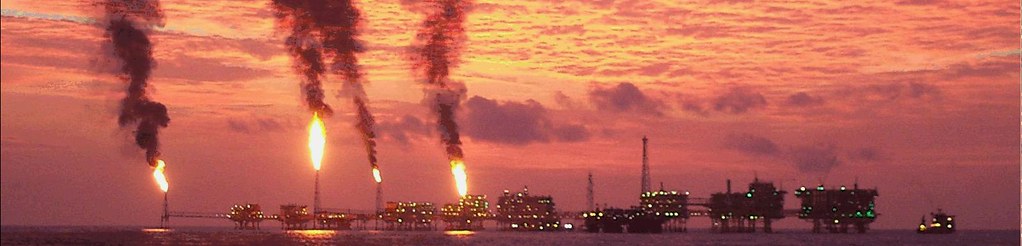
Most people understand 'Offshore' in the maritime context to mean oil and gas rigs. However today it would be more accurate to describe it as the energy industries generally (encompassing both traditional oil and gas and new forms of energy generation at sea, like wave and windpower). Offshore vessels then include any vessels involved in these industries, as well as those involved in a few other very niche industries which occur entirely away from land (cable laying,  offshore dredging etc.).

Oil & Gas Vessels
Drillship
Semi-Sub
Rigs
Accommodation Vessels
Cargo Transporters
Platform Supply Vessels
AHTS
Guard Vessels / Patrol Boats
FPSO

Wind Farm Vessels
Construction
Engineer Supply

Other (Niche Offshore Industries)
Cable Layers
Pipe Layers
Offshore Dredging
Seismic Survey

Thursday, 1 December 2011

A Brief Guide to Tugs and Towing

Tugboats are small but very powerful vessels which were developed to specifically assist other vessels (by pushing or towing them from a to b, moving them around in canals or harbours, fire fighting etc.). 


Today they are more advanced than ever and can perform a multitude of tasks but the basic construction of a simple harbour tug remains broadly as the following diagram. You will notice a towage rope for assisting other vessels and heavy 360o fendering (the tyres)


TERMINOLOGY
- A tug is always a boat, and not a ship. The craft began their lives as relatively small vessels and so will forever be categorized as such, even though today many are very large vessels.
- A tug tows other vessels using a towage or towing line (when a piece of rope is used) or a wire (when some form of metal rope is used).

TYPES


General Harbour Tugs - The most common form, they perform a multitude of general assistance tasks around ports and harbours. Generally small and do not venture far from the harbour or port limits.


SDMs (Ship Docking Modules) - These are very specialised little tugs used to help moor other small vessels, normally yachts, in tight marinas. Because they need to be so versatile and gentle with their charge they look a little bit like padded floating saucers.


Ocean-Going Tugs - These are much larger tugs used to tow vessels over a long journey in potentially hazardous seas.


AHTS (Anchor Handling Towage Supply) Tugs - These vessels provide support for offshore structures in the energy industries, both old and new. They are specially built to be able to raise huge anchors belonging to offshore rigs, tow vessels and platforms where necessary and carry supplies out to them.

CONTRACTS


For a look at the principal contracts involved in Towage work see this article

Saturday, 22 October 2011

Laytime & Demurrage: A Back-to-Basics Guide

One of the more mysterious elements of shipping law, at least to the uninitiated, are the issues of laytime and demurrage. I thought, for this reason, that it might be useful to do a 'bare bones' guide to the area. As with other areas identified many people use the terminology incorrectly so don't get confused by people saying apparently contradictory things. 


This area of shipping law deals with the general principle that if you charter (hire) a ship to move cargo from A to B at a set price (i.e. a voyage charter), then you should pay the ship compensation if it gets held up whilst loading or discharging the cargo you wanted to move, i.e. if you delay in getting your goods to the port and the ship's journey takes 2 days longer as a result, you should compensate the ship for those 2 days lost. Here is the framework that has developed, in simple terms. 

Ships are not like trains and cannot confirm absolute timetables for being in place A to B, especially when they are 'tramping' (just going where ordered next and not between set ports). So, when you enter a charterparty to hire a ship to move your goods the ship is given Laydays, being the period of days in which the ship can arrive to load your goods. After this point comes the Cancelling Date; if the ship is not there by this date the charterer may cancel the contract, basically because the ship is so late they either no longer wish to move the goods or wish to use another ship. This period is sometimes referred to altogether as the Laycan (Laydays + Cancelling).

When the ship arrives to load or discharge it tenders a Notice of Readiness (NOR) to the charterer, stating that they are ready to load / discharge. After a period of time (normally 6 hours) of giving notification it is considered reasonable for the charterers to have been able to start loading, so Layitme starts to run. Laytime is a period of time set out in the charterparty which gives the charterer an allowance for time to load (often 36 hours, but depends on trade and means of loading - oil tankers load faster than bulk cargo for instance). Once the charterers used up their laytime allowance time switches to Demurrage. Demurrage is a rate of compensation per day (or pro rata per hour) that they must pay to the shipowner for holding up the ship for longer than agreed. 

If the ship is held up for reasons for which the charterer is responsible but outside the running of laytime / demurrage then the shipowner can sue the charterer for Detention. Usually the compensation awarded for detaining the ship is the same as the demurrage rate, because the parties have already agreed a convenient compensation calculation for using the ship's time outside the contract so it is easy for the courts to apply this rate. 

Tuesday, 18 October 2011

South of England P&I Club

At the weekend we received news that it appeared the South of England P&I Club had ceased trading. The South of England is / was a commercial (rather than mutual) protection and indemnity (third party liability) insurer and covered a range of interesting bulk carriers and tankers, among other vessels.


The International Group of mutual P&I clubs had a North of England and a West of England club, so perhaps the creator of the South of England felt that merely choosing another point on the compass would give the Club gravitas on the international P&I scene, but alas it appears that it was not to be as we hear that the liquidators have been called in. 

We received first notification in writing via the Maritime Advocate circular: 'It is at the Clyde & Co Party at the Merchant Taylors’ Hall that we hear, courtesy of the Senior Partner’s welcome speech that the South of England P&I Club has appointed provisional liquidators in Bermuda and has ceased trading. So we bid farewell to another have-a-go P&I operation, set up outside the International Group Agreement; it joins a list comprising the Oceanus, Sphere Drake, Dragon, OMM and Pacindat to name but a few. It only goes to show that the market outside the IGA is demanding and only the very long term players in the fixed market can really cope. The short span of attention, which invests your very average insurance operation simply will not sustain a business with low general underwriting profitability, accomplished claims handling and a claims tail of 30 years or more.'

That seemed relatively final and was confirmed in a later article in Insurance Day, but it clarified that the liquidators were actually called in by the company's auditors, KPMG. Later in the day we could see in Lloyds List that the Club was actually promising to fight the appointment of liquidators in Bermuda and intended to keep trading. However, looking at the news from the Club throughout the year it does appear that the writing is on the wall for the venture. If or when it does cease trading it will join a long list of commercial P&I ventures which have failed to maintain a long-term presence in the market.


The South of England started trading in 2004 and was registered in Bermuda, but appears to have been managed from Zurich, with most of the day-to-day claims management and some other services taking place in the Club's UK base in Brighton.

Wednesday, 12 October 2011

The "Rena" Grounding in New Zealand - What Limit Applies?

The "Rena" ran aground on a reef off the North Island in New Zealand on 5 October 2011. It is predicted to be the worst maritime disasters in New Zealand's history. Questions quickly began as to what the total cost would be and whether the shipowner (MSC is reported to have had the container vessel on a 5 year hire agreement) would be able to limit. I have heard a lot of speculation about what the result will be but in my opinion the vessel will be able to limit its liability to around USD 9.5 Million (considering that no direct fault of owners or charterers is alleged and proven).


There are 4 main conventions which apply to limitations for release of oil. The difference is extremely confusing but hopefully the following provides a brief 'idiot's' guide.

1. The CLC Convention - This would normally be the first port of call for an oil pollution claim. However, it only covers persistant oil - i.e. heavy oil carried as cargo by oil tankers. It will not therefore apply.

2. The 1992 Fund Convention - In the same way as above this would not apply.

3. The Bunker Pollution Convention - This convention was brought in specifically to deal with the effect of large oil spillages from commercial vessels due to them spilling their own fuel (bunkers), rather than a cargo of fuel they were carrying. The New Zealand government has supported its implementation recognising that in the last ten years the worst oil pollution incidents in NZ waters have been bunker spills, however, to my knowledge they have not yet ratified or acceded to the convention. It therefore has no effect.

4. The LLMC 1976 - This is the convention that will probably therefore apply by default, as implemented into NZ law in the Maritime Transport Act 1994 . It is very broad brush and does not even specifically mention oil but the limit for claims which do not involve injuries to people or passengers are as follows:
(a) in the case of a ship of not more than 300 gross tons, 83 333 units of account:

  • (b)     in the case of a ship of more than 300 gross tons, but not more than 500 gross tons, 167 000 units of account:
  • (c) in the case of a ship of more than 500 gross tons, 167 000 units of account* plus a further number of units of account calculated as follows:
    • (i) for each gross ton of the ship from 501 to 30 000 tons, 167 units of account; and
    • (ii) for each gross ton of the ship from 30 001 to 70 000 tons, 125 units of account; and
    • (iii) for each gross ton of the ship in excess of 70 000 tons, 83 units of account.

Therefore the limit can be calculated as follows:
a. 167,000 SDR (for the first 500 GT)
b. 29,500 x 167 SDR = 4,926,500 SDR (for 501 to 30,000 GT)
c. 7,209 x 125 SDR = 901,125 SDR (for 30,001 to 37,209 GT - the GT of the "Rena")
Total = 5,994,625 SDR (or) approx. 9,500,000 US Dollars at today's rate of exchange.

* A 'Unit of Account' means a Special Drawing Right - see this article for an explanation of what this is. 

Sunday, 2 October 2011

What is the Difference Between a Port, Quay, Pier and Wharf?

These terms are sometimes used interchangeably, but there are differences between each which it is useful to remember.


A Port is generally a description of a place on the coast which has facilities for boats or ships to call into, and usually a village or town attached. Normally these places developed because the natural features at that particular part of the coastline (a break in the high cliffs, an area of deepwater where the coast is rocky etc.). Because a port is a description of a type of function, ports can look very different from one another and a port may contain all of the things listed below (wharfs, quays, piers etc.). Porto Cervo, in Italy, is a good example.

A Wharf is a man-made structure on a river or by the sea, which provides an area for ships to safely dock. Some are very intricate, with multiple types of berth over a large area, and navigable channels, and others (like this one, below, from Australia) are more straightforward. A Wharf can contain quays and piers and will normally have buildings within it to service the ships (often warehouses and offices). Because of their abundance of unusual buildings and ready-made water features, unused wharfs are often converted into expensive retail and housing areas (for instance Canary Wharf and Butler's Wharf in London).


A Quay is, technically, a part of the river bank or coastline which has been modified so ships can dock at it parallel to the shore. This boat is moored at the quay in Poole, England. 


A Pier is a, normally wooden, structure which protrudes from the shore at a level above the water level, allowing ships to disembark passengers in the deeper water further out. The length of the pier may also provide berths for smaller boats.

  © Blogger template 'Isolation' by Ourblogtemplates.com 2008

Back to TOP